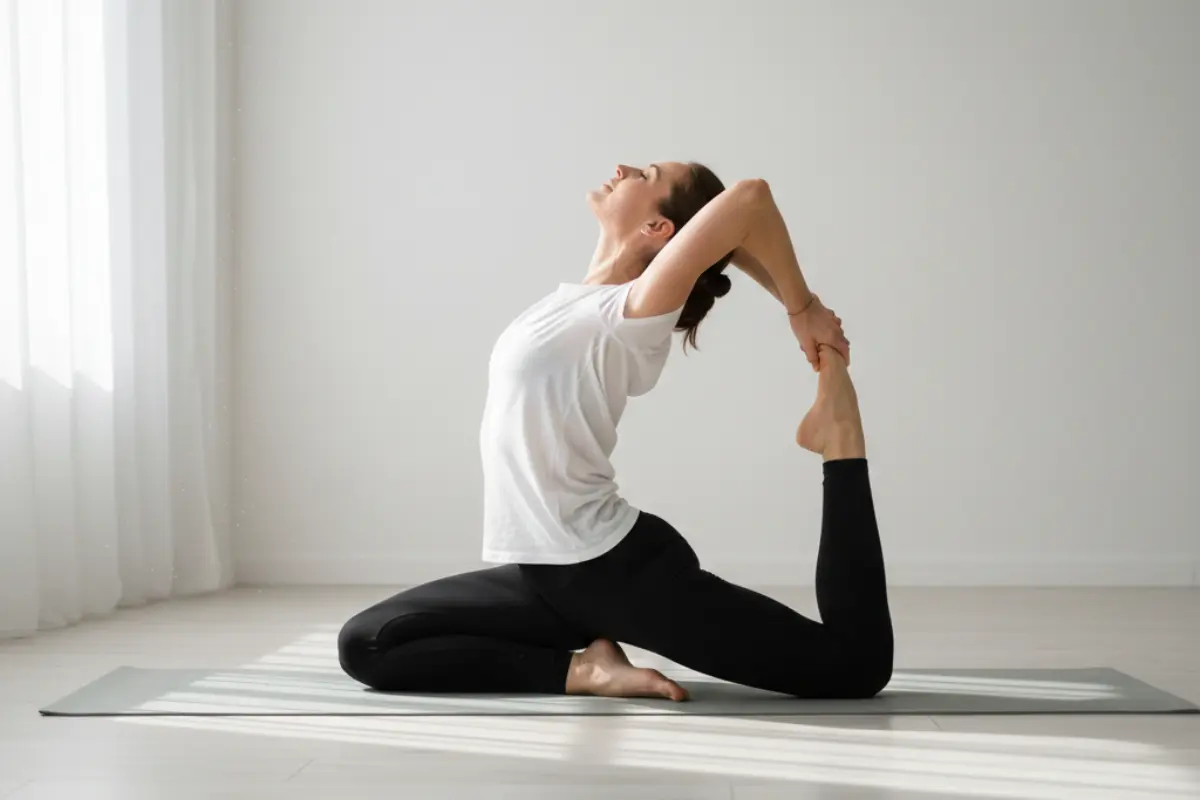
What Is Kapotasana (King Pigeon Pose)?
Kapotasana, also known as King Pigeon Pose, is one of yoga’s deepest backbends. The word “Kapota” means pigeon in Sanskrit. This pose symbolises grace, heart-opening, and surrender.
Kapotasana is not the same as the beginner pose, Eka Pada Rajakapotasana. It’s more advanced and part of the second series in Ashtanga Yoga. It demands strength, balance, and deep flexibility in the spine, hips, and shoulders.
Warning: This is an advanced pose. Always warm up, use props, and practice under guidance.
Spiritual Meaning of Kapotasana
Kapotasana is linked to the heart chakra (Anahata), the throat chakra (Vishuddha), and the third eye chakra (Ajna). It’s known to:
- Open emotional blocks
- Promote love, forgiveness, and letting go
- Help with inner peace and spiritual awareness
Practicing Kapotasana with mindful breathing can lead to a deep emotional release and a sense of surrender.
Physical Benefits of Kapotasana (King Pigeon Pose)
This backbend offers powerful benefits for the entire front body and spine.
Flexibility & Mobility
- Stretches hip flexors (psoas), quads, chest, and shoulders
- Improves spine flexibility, especially in the thoracic and lumbar regions
Strength & Stability
- Builds back strength
- Engages the core for balance
- Supports better posture
Therapeutic Effects
- May reduce mild back pain
- Boosts blood flow and energy levels
- Improves digestion by stimulating the abdominal organs
Mental & Emotional Benefits
- Releases stored tension from the hips
- Teaches patience and mental resilience
- Enhances body awareness and mindfulness
- Reduces stress and anxiety
Preparatory Poses for Kapotasana
To prevent injury, warm up with the following poses:
- Bhujangasana (Cobra Pose) – Opens the chest
- Dhanurasana (Bow Pose)—Stretches the whole front body
- Setu Bandhasana (Bridge Pose) – Strengthens spine and glutes
- Supta Virasana (Reclining Hero Pose)—Opens hips and thighs
- Urdhva Dhanurasana (Wheel Pose) – Builds deep backbend readiness
- Eka Pada Rajakapotasana—Stretches hips deeply
How to Do Kapotasana (Step-by-Step)
- Start in a kneeling position, knees hip-width apart.
- Place your hands on your hips. Inhale deeply.
- Begin the backbend from your upper back. Avoid collapsing into the lower back.
- Reach your arms back toward your feet.
- Drop your head back gently. Stay relaxed in your jaw and neck.
- Touch your heels with your hands. If possible, lower forearms or elbows.
- Lift the chest and engage your inner thighs.
- Hold for 3–5 breaths, or up to 30 seconds.
- Exit slowly, bringing your hands to your hips and lifting the torso carefully.
Follow with Child’s Pose (Balasana) to release the spine.
Modifications and Variations
For Beginners:
- Use yoga blocks under your hands
- Wrap a strap around your ankles if you can’t reach them
- Practice near a wall for extra support
For Advanced:
- Hold for longer durations
- Try grabbing both feet at once
- Transition into the pose from standing
Props:
- Straps for flexibility
- Blocks for height and reach
- Blankets under knees or ankles for comfort
Common Challenges & Solutions
Lower Back Pain
- Engage your core
- Focus on the bend in your upper back
Can’t Reach Feet
- Use a strap
- Practice hip and quad stretches
Knee Discomfort
- Use padding under the knees
- Don’t force the pose
Mental Fear
- Start with easier backbends
- Use your breath to stay calm
Common Mistakes in Kapotasana
- Forcing the front leg
- Letting the back leg turn out
- Uneven hips
- Rounding the back too early
Tip: Keep hips square, spine long, and use props.
FAQ: Kapotasana (King Pigeon Pose)
Q1: What are some common mistakes in Pigeon Pose?
A: Forcing the front leg, twisting hips, or collapsing the chest. Keep the hips square and use props if needed.
Q2: What are the disadvantages of Pigeon Pose?
A: It can strain the knees, hips, or lower back if done without a warm-up or proper alignment.
Q3: Why is Pigeon Pose so difficult?
A: It requires deep hip openness, a strong back, and flexible thighs—areas that are tight for most people.
Q4: Who should avoid Pigeon Pose?
A: People with knee injuries, back issues, or who are pregnant should avoid or modify this pose.
Q5: What happens if I do Pigeon Pose every day?
A: You may improve hip mobility and calm the mind, but only if done with good form and recovery.
Q6: Is Pigeon Pose bad for osteoporosis?
A: Yes, deep backbends may be unsafe for those with fragile bones. Consult a doctor or therapist first.
Q7: What is better than the Pigeon Pose?
A: The reclined figure-four pose offers similar benefits more gently.
Q8: How long should I stay in Pigeon Pose?
A: Start with 30–60 seconds. Go up to 2–3 minutes as you progress.
Q9: Is Pigeon Pose good for sciatica?
A: It may help in some cases, but it can worsen pain if done incorrectly. Always move slowly and consult a professional.
Q10: How to cue into Pigeon Pose?
A: From Downward Dog, bring your knee forward, shin across the mat, and back leg straight. Keep hips even.
Final Thoughts
Kapotasana is a challenging pose, but it’s full of rewards. It opens your heart, strengthens your spine, and calms your mind. Approach it with patience, breath, and self-care.
“Yoga is not about touching your toes. It is what you learn on the way down.”
Stay committed, trust your journey, and let your practice lead you inward.