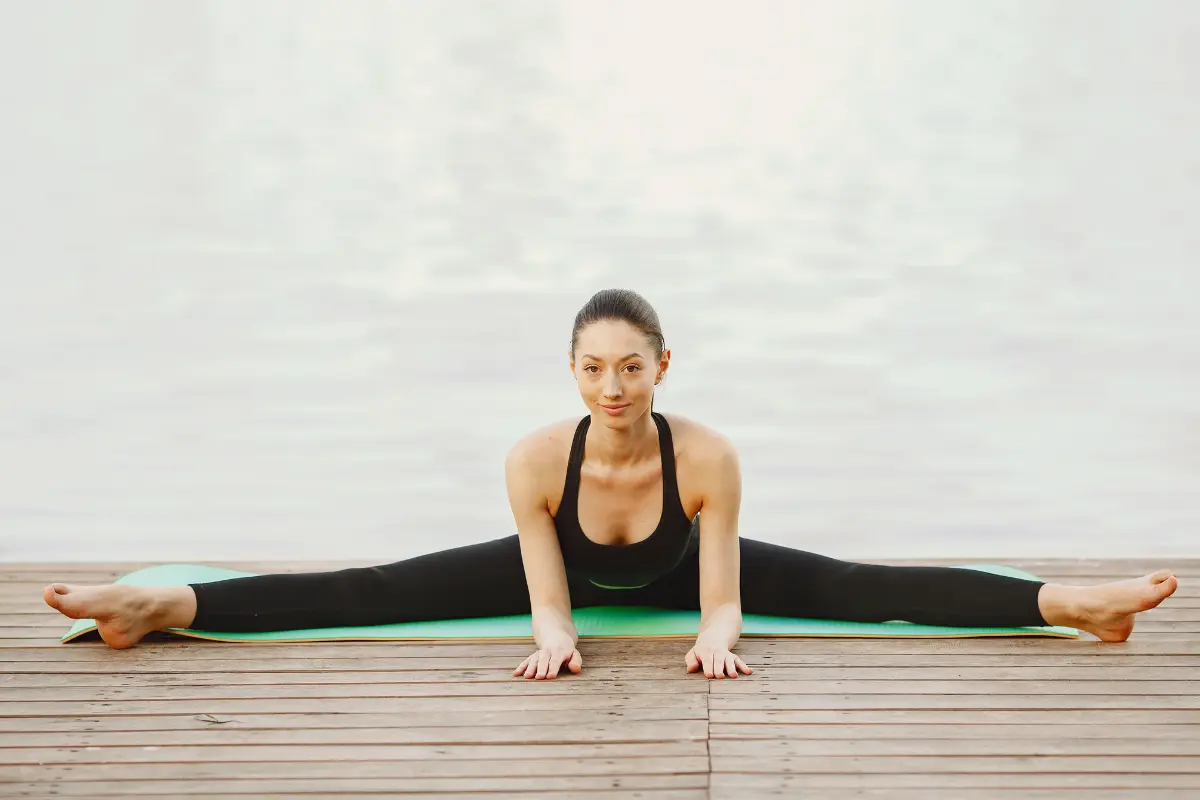
The Upavistha Konasana is one of the most common but effective yoga poses. This asana or pose has another name, Wide-Angled Seated Forward Bend. This pose helps stretch your body. It also opens your hips.
In Sanskrit, “Upavistha” means sitting. “Kona” means angle. “Asana” means posture. So, it’s a sitting angle pose. You sit with your legs wide. Then, you bend forward. This makes you more flexible. It also helps clear your mind.
Many yoga styles use this pose. These include Hatha, Vinyasa, and Iyengar yoga. They all agree that hip openers are important. These poses stretch your muscles. They also release stress and emotions. This helps you feel calm and balanced.
Upavistha Konasana is a powerful pose because it works on both the body and the mind. Doing this with focus and care helps improve balance, flexibility, and inner peace. The wide-legged position requires both strength and relaxation, teaching us how to balance effort and ease. In essence, Upavistha Konasana is more than just a physical stretch; it’s a practice that can bring many benefits to both our body and mind when done correctly.
Anatomy and Physiology
Upavistha Konasana, or Wide-Angled Seated Forward Bend, affects many parts of your body. It gives you a great stretch and makes your body stronger. Knowing which body parts are involved helps you do the pose better.
Muscles That Stretch and Get Stronger
When you do Upavistha Konasana, also known as Seated Wide-Legged Forward Bend, you work several important muscle groups. Your hamstrings, found at the back of your thighs, get a deep stretch as you fold forward. This helps make them more flexible and can stop injuries. The pose also stretches your inner thighs and adductor muscles, which are the muscles that pull your legs together. This can help you move more freely and loosen tight spots.
Your spine is very active in Upavistha Konasana. As you bend forward, you stretch the muscles along your spine. Doing this asana your spine streched longer and improve your posture. The stretch can also ease tension in your back, which usally comes from long-sitting. Also, your shoulders and core muscles work to support your upper body as you reach forward. Strong core muscles help keep your body steady and balanced in this pose.
Joints Involved and Their Movement
Upavistha Konasana uses several joints. Each one helps you move and stretch. Your hips are the main joints. They let your legs open wide. This wide leg movement helps open your hip joints. It also makes them more flexible.
Your knees and ankles are also important. Keep your knees straight, but don’t lock them. This helps stretch and strengthen the muscles around your knees. Your ankles hold your feet. Flex your feet to get a deeper stretch in your legs.
Your spine is key too. Keep it long and straight as you lean forward. This helps your spine become more flexible. It also helps your spine stay in line.
Benefits for the Nervous System
Upavistha Konasana has several benefits for the nervous system. The forward-bending motion has a calming effect on the body, helping to reduce stress and anxiety. This pose encourages deep breathing, which activates the parasympathetic nervous system, promoting relaxation and a sense of calm.
Benefits for the Circulatory System
This pose also benefits the circulatory system by improving blood flow to the lower body. As you stretch and lengthen the muscles in your legs, blood circulation to these areas is enhanced. This increased blood flow helps in delivering oxygen and nutrients to the muscles, promoting faster recovery and overall health.
Potential Physical Challenges and Contraindications
Upavistha Konasana has many upsides, but it can be tough if you have tight hamstrings or stiff hips. If your lower back hurts or you’ve had back problems before, you should be careful with this pose. You can use things like blankets or bolsters to help support you and take some pressure off your lower back.
Also, if you have knee or ankle problems, you need to watch how you line up your body in this pose so you don’t make those issues worse. If you’re pregnant, you shouldn’t do deep forward bends. It’s best to ask a good yoga teacher how to change the pose to fit your needs.
To wrap up, Upavistha Konasana is a strong pose that stretches and builds up different muscles and joints. It’s also good for your nerves and blood flow. When you know how your body works in this pose, you can do it and get all the good stuff it offers.
How to perform Upavistha Konasana?
Upavistha Konasana is a great stretch. It helps your hips and legs. Here’s how to do it in a simple way.
Step-by-Step Breakdown
First, sit on the floor. Stretch your legs out in front of you. Sit up tall. Your back should be straight. Your shoulders should be soft. Now, spread your legs wide. Go as wide as you can. Keep your legs straight. Your kneecaps should point up.
Take a deep breath in. Make your back long. Reach the top of your head up. As you breathe out, lean forward. Bend from your hips. Keep your back straight.
Put your hands on the floor. You can put them between your legs. Or, you can put them on your shins. If you are more flexible, reach for your feet. You can even reach past your feet.
Stay in this pose for a few breaths. Let your body relax. Go deeper into the stretch with each breath out.
Alignment Cues
If you are new to this pose, keep your back long. Do not let your back bend. If it’s hard to sit up straight, sit on a folded blanket. This will lift your hips. It helps you lean forward.
If you are more flexible, you can lean further forward. Try to bring your chest closer to the floor. Always keep your back long.
Use of Props
You can use props. These are very helpful. Especially if your legs or hips are tight. Put a blanket under your hips. This helps your hips tilt forward. It makes it easier to bend. You can also use yoga blocks. Put them under your hands. This helps if it’s hard to reach the floor.
Common Mistakes and Corrections
Rounding the Back: Don’t hunch! Imagine your spine growing longer as you breathe in. Lead with your chest when you bend forward. This keeps your back straighter.
Knees Rolling Inward: Keep your kneecaps pointing up. Tighten your thigh muscles. This helps your knees stay in the right place.
Breathing Techniques
Breathe deeply and slowly. This helps your yoga pose. When you breathe in, make your spine long. As you breathe out, stretch a little more. Slow breaths relax your muscles. They also calm your mind. This makes your yoga practice better and more fun.
Doing these steps makes Upavistha Konasana good for you. It helps your body and your mind.
What are the benefits of Upavistha Konasana?
Upavistha Konasana, or the Wide-Angled Seated Forward Bend, offers a wide range of benefits that impact both the body and mind. This pose is highly regarded in yoga for its ability to enhance physical flexibility, mental clarity, and overall well-being. Let’s explore these benefits in more detail.
Physical Benefits
Upavistha Konasana is very good for your body.
It makes you more flexible. This pose stretches your hamstrings. These are the muscles at the back of your thighs. It also stretches your inner thighs and hips. When you stretch like this, your tight muscles become looser. This helps you move more easily. Doing this pose often can make your whole body more flexible.
It helps your posture. Good posture means your spine is straight. Upavistha Konasana stretches and strengthens your back muscles. This helps your spine line up correctly. When your spine is straight, you might have less back and neck pain. Bad posture often causes these pains.
It improves your balance. Even though you sit in this pose, you use your core muscles. Your core is your stomach and back muscles. You need to keep these muscles strong to bend forward steadily. Upavistha Konasana makes your core stronger. A strong core helps you balance better. It also makes you more stable. This helps you with other yoga poses. It also helps you with other physical activities.
Mental Benefits
Upavistha Konasana is very good for your mind. It helps you feel calm. When you bend forward in this pose, it makes you relax. This helps with stress and worry.
Here are three ways it helps your mind:
Calms Your Nerves: Bending forward in the pose makes your body feel peaceful. This calms your nerves. It is good for people who worry a lot. It helps quiet your thoughts. You feel a sense of peace inside.
Reduces Stress: The pose helps you deal with stress. When you relax, your stress goes down. This is a simple way to feel better when you are stressed.
Boosts Focus: This pose also makes you focus. You pay attention to your breath and body. This helps you concentrate better. Over time, your mind becomes clearer. You feel more present and aware.
Therapeutic Applications
Upavistha Konasana, also known as the Wide-Angle Seated Forward Bend, offers special healing benefits. This yoga pose can help people with hip pain. It gently stretches and opens the hip joints. This helps to make the hips less stiff and sore.
The pose is also good for those with menstrual pain. Bending forward in this pose can relax the lower belly. This can help to reduce cramps.
Furthermore, Upavistha Konasana can help people with sciatica. Sciatica is a type of nerve pain. This pose stretches the back of the thighs (hamstrings) and the lower back. This stretching can take pressure off the sciatic nerve. So, the pose can help ease the pain of sciatica.
Benefits for Specific Populations
Upavistha Konasana is a flexible pose that you can change to help different groups of people. Pregnant women can use a changed version of this pose to stretch and ease lower back pain, while also relaxing. But pregnant women should check with a good yoga teacher to make sure they do the pose . Older people can also get good results from Upavistha Konasana.
It helps keep their hips and legs flexible and mobile, which matters for moving around and living on their own. For sports players, this pose works great to stretch the muscles in the lower body. This can stop injuries and make them perform better.
Upavistha Konasana helps your body, mind, and health. It can make you more flexible. It also helps you feel less stressed. This pose may even aid with some health issues. Adding it to your yoga makes your routine better. You can change Upavistha Konasana for different people. This makes it a good pose for everyone to use.
Philosophical and Spiritual Aspects
Upavistha Konasana, or Wide-Angled Seated Forward Bend, extends beyond physical benefits, offering rich philosophical and spiritual insights. This pose is deeply connected to the energy centers of the body, particularly the chakras.
Connection to the Chakras
Upavistha Konasana has a strong connection to the Muladhara (Root) and Svadhisthana (Sacral) chakras. The Muladhara chakra sits at the spine’s base and stands for stability and grounding. Doing this pose helps to turn on and balance this energy center giving a feeling of safety and a link to the earth. The wide-legged position also works on the Svadhisthana chakra, which relates to creativity, feelings, and energy flow. By opening up the hips, this pose helps to let out stuck emotions and boost creative energy.
Symbolic Meaning of the Pose
Upavistha Konasana, or Wide-Angle Seated Forward Bend, holds deep meaning. It shows openness. Spreading your legs wide is like opening yourself to new things. Folding forward means you accept life’s challenges. This pose helps you look inside yourself. It encourages curiosity and acceptance. It’s all about finding out who you are. It also helps with spiritual growth.
Mindfulness and Intention in Practice
Mindfulness is key in Upavistha Konasana. You need to really focus on your breath and how your body feels. This helps you stay in the present moment. Before you start, set a goal. Maybe you want to be more patient or let go of stress. This makes the pose more meaningful. Upavistha Konasana is more than just stretching. It can help your mind and spirit grow. It brings more balance, awareness, and openness into your life.s.
Key Takeaways
Upavistha Konasana, also known as Wide-Angled Seated Forward Bend, is a great yoga pose. It helps your body and mind in many ways.
This pose makes you more flexible. It helps you sit up straighter, which means better posture. It also helps you feel steadier and balanced. Upavistha Konasana can make you feel calm. This can lower stress and worry.
The pose can also help with some pains. It may ease hip pain, period cramps, and sciatica. This pose also has a deeper meaning. It helps you connect with your inner self. It can make you feel more open to new things.
Doing this pose often helps your body and mind over time. But always listen to your body. Don’t push too hard. You can use props beside your mat, like blankets or blocks to make the pose easier. This helps you practice safely and comfortably.
Upavistha Konasana is more than just a stretch. It can change your yoga practice. It can also improve your overall well-being. When you do this pose, be mindful and focused. This helps you feel more connected to yourself and the world. Remember to be balanced, patient, and open, both in yoga and in life.