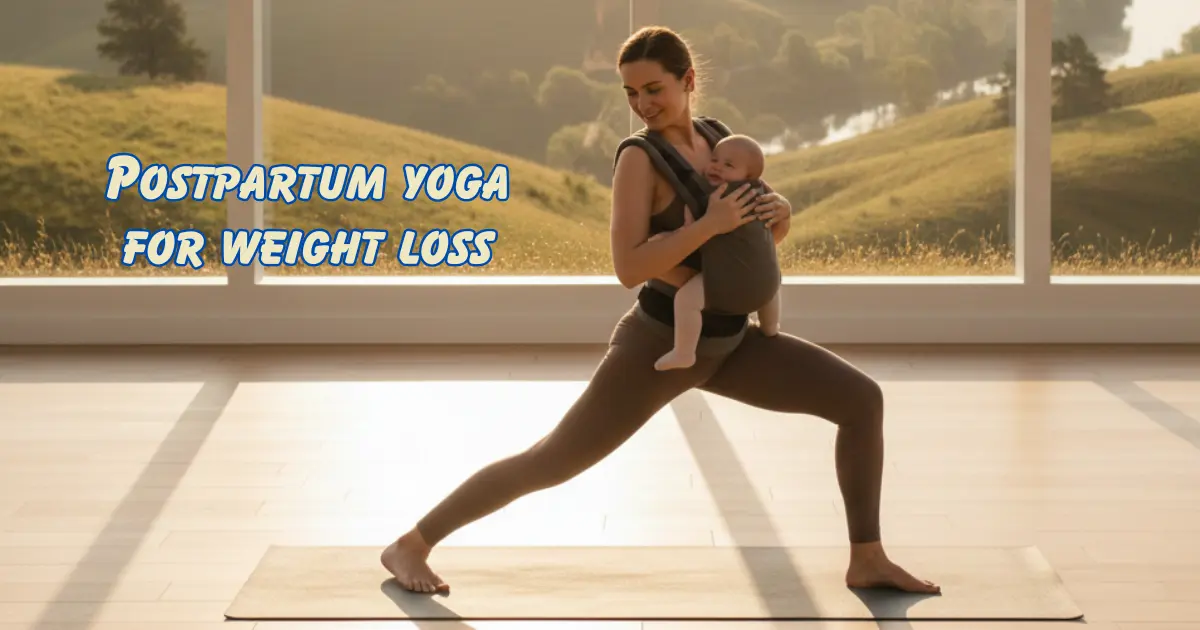
Looking for a safe and gentle way to lose baby weight while helping your body heal? Postpartum yoga for weight loss may be exactly what you need.
After childbirth, many moms feel tired, weak, and disconnected from their bodies. You may want to fit into your old clothes again, but your body also deserves patience, care, and proper recovery. That is where postpartum yoga can make a real difference.
Here, we share 12 gentle and supportive postpartum yoga poses that may help recovery, rebuild strength, and support healthy weight management. We also discuss these poses one by one to understand. Now you can follow how to do it, pose benefits, ensure safety, make modifications, and get better results.
Unlike intense workouts, postpartum yoga focuses on gentle movement and mindful breathing. It helps strengthen your core and pelvic floor, improves flexibility, and supports healthy calorie burning without putting extra stress on your recovering body. At the same time, it can reduce stress, improve sleep quality, and boost your overall mood, all of which play an important role in healthy weight loss.
Mama, your body created and nurtured a new life. Be proud of that journey. Move with kindness, stay consistent, and trust the process. Small daily steps can lead to amazing changes over time.
Why Postpartum Yoga for Weight Loss
Postpartum yoga for weight loss can support healthy postpartum weight management. It also encourages gentle movement, rebuilding strength, and lowering stress. It may help reconnect with the core and pelvic floor after pregnancy. Combined with balanced nutrition, sleep, and medical guidance, regular movement may support gradual weight changes over time.
If you have diastasis recti, pelvic floor symptoms, or have had a C-section, talk with your healthcare professional before beginning exercise.
Benefits of Postpartum Yoga Poses for Weight Loss
These poses support your body in many ways. They work gently. They work deeply. They respect postpartum healing.
Core restoration comes first. After birth, the core feels weak. Some moms have separated abs. These yoga poses help wake up deep core muscles. They support healing from the inside. With time, the belly feels firmer. The waist feels more supported.
A metabolic boost happens naturally. Many poses are held for a few breaths. This mild effort raises the heart rate. A full session can help burn around 200–300 calories. It is not harsh cardio. It is a steady and safe movement.
Stress reduction is a big benefit. Stress raises cortisol levels. High cortisol makes belly fat harder to lose. Slow breathing and calm poses lower stress hormones. This supports fat loss and emotional balance.
Full-body toning happens without strain. Glutes, legs, arms, and back all work together. Muscles become stronger and more balanced. Your body feels lighter and more stable.
Postpartum yoga is not about pushing hard. It is about rebuilding smart. Step by step. With care.
12 Essential Postpartum Yoga Poses for Weight Loss
To see results, hold each pose for 5–10 deep breaths (roughly 30–60 seconds). Practice on a stable surface and listen to your body’s signals.
1. Cat-Cow Pose (Marjaryasana-Bitilasana)
This rhythmic movement is the perfect “wake-up call” for your metabolism. It gently stimulates the digestive organs and begins the process of re-engaging a weakened core without the strain of a traditional crunch.
- Start on all fours with hands under shoulders and knees under hips.
- Inhale (Cow): Drop your belly toward the mat, lift your chest, and look up.
- Exhale (Cat): Round your spine toward the ceiling, tucking your chin and tailbone.
- Flow between these two movements with your breath.
- Benefits: Improves spinal flexibility, massages abdominal organs, and relieves “nursing back” pain.
- Modification: If you had a C-section, keep the movement small to avoid pulling on the incision.
- Weight Loss Tip: On the “Cat” exhale, pull your navel deep toward your spine. This activates the transverse abdominis, the muscle responsible for a flatter stomach.
2. Child’s Pose (Balasana)
While it looks like a resting pose, Child’s Pose is a powerful tool for weight loss by lowering the stress hormones. It cause your body to store fat in the midsection.
- Kneel on the floor, touch your big toes together, and sit on your heels.
- Separate your knees as wide as your torso.
- Fold forward, resting your forehead on the mat and extending your arms.
- Breathe deeply into your back and hips.
- Benefits: Lowers cortisol, stretches the lower back, and calms the nervous system.
- Modification: Place a pillow or bolster under your chest if your hips feel tight.
- Weight Loss Tip: Focus on “belly breathing.” Deep diaphragmatic breaths improve oxygen flow, which is essential for efficient fat oxidation and cellular repair.
3. Bird-Dog Pose
This is one of the most effective exercises for functional core strength. It forces your body to stabilize, which burns more calories than static stretches and targets the “pooch” area directly.
- Begin on all fours in a neutral tabletop position.
- Extend your right arm forward and your left leg back simultaneously.
- Keep your hips level—don’t let one side dip.
- Hold for 5 breaths, then switch sides.
- Benefits: Strengthens the core, glutes, and lower back; improves balance and coordination.
- Modification: Keep your hand on the floor and only lift the leg until you feel stable.
- Weight Loss Tip: Squeeze your glutes and flex your extended foot. Engaging these large muscle groups increases your metabolic rate during the hold.
4. Bridge Pose (Setu Bandhasana)
Bridge pose is a powerhouse for the posterior chain. By activating the glutes and hamstrings, you are building lean muscle that burns more energy even when you are at rest.
- Lie on your back with knees bent and feet flat, hip-width apart.
- Place arms at your sides, palms down.
- Press through your heels to lift your hips toward the ceiling.
- Interlace your fingers under your back if comfortable.
- Benefits: Tones the glutes, opens the chest, and strengthens the pelvic floor.
- Modification: Place a yoga block under your tailbone for a supported, restorative version.
- Weight Loss Tip: Imagine you are squeezing a ball between your knees. This engages the inner thighs and pelvic floor, maximizing the toning effect on your lower body.
5. Tiger Pose (Vyaghrasana)
Tiger pose adds a dynamic element to your practice, targeting the thighs and arms while providing a deep stretch that aids digestion and reduces bloating.
- Start in tabletop (all fours).
- Lift your right knee, then extend the leg back and up toward the ceiling.
- Reach your left arm forward or, for a challenge, reach back to grab your foot.
- Arch slightly and look up, engaging your core for balance.
- Benefits: Tones the thighs and hips, improves digestion, and strengthens the arms.
- Modification: Keep both hands on the mat and focus only on the leg movement.
- Weight Loss Tip: Move dynamically. On an exhale, bring your knee toward your nose, then inhale and extend back. This “crunch” motion fires up the metabolism.
6. Warrior I (Virabhadrasana I)
As a standing pose, Warrior I requires significant energy and muscle engagement. It builds heat in the body, which is a key component of calorie burning.
- From standing, step your right foot forward about 3–4 feet.
- Turn your left foot out at a 45-degree angle.
- Bend your right knee until it is over the ankle while reaching arms overhead.
- Square your hips toward the front of the mat.
- Benefits: Builds leg endurance, opens the hips, and increases lung capacity.
- Modification: Take a shorter stance if you feel unstable or have pelvic pain.
- Weight Loss Tip: Sink deeper into the front lung (safely) to engage the quadriceps. Large muscle engagement like this is the fastest way to boost your daily calorie burn.
7. Puppy Pose (Uttana Shishosana)
This “halfway” pose between Cat-Cow and Downward Dog is excellent for posture. Better posture leads to better breathing, which is the foundation of all weight loss.
- Start on all fours.
- Walk your hands forward while keeping your hips stacked directly over your knees.
- Drop your chest toward the floor and rest your forehead or chin down.
- Keep your arms active and your elbows lifted.
- Benefits: Reverses “nursing slouch,” stretches the shoulders, and lengthens the spine.
- Modification: Place your hands on yoga blocks to reduce the intensity in the shoulders.
- Weight Loss Tip: Engage your lower abdominals by pulling them in as you stretch. This protects your spine and keeps the core active during the stretch.
8. Legs-Up-the-Wall (Viparita Karani)
This is the ultimate recovery pose. It helps with “water weight” by encouraging lymphatic drainage and reducing the swelling (edema) common in the postpartum period.
- Sit sideways against a wall.
- Gently swing your legs up the wall as you lie back on the floor.
- Rest your arms at your sides, palms up.
- Stay here for 1–5 minutes, breathing deeply.
- Benefits: Reduces leg swelling, balances hormones, and promotes deep relaxation.
- Modification: Place a folded blanket under your hips for extra comfort.
- Weight Loss Tip: Focus on slowing your heart rate. A relaxed body is much more efficient at processing insulin and regulating blood sugar, preventing fat storage.
9. Triangle Pose (Trikonasana)
Triangle pose is fantastic for “waist-whittling.” The lateral stretch and twist stimulate the gallbladder and liver, helping the body process fats and toxins more effectively.
- Stand with feet wide. Turn your right foot out 90 degrees.
- Reach your right arm forward, then hinge at the hip to bring your hand to your shin or a block.
- Extend your left arm straight up toward the sky.
- Keep both legs straight but not locked.
- Benefits: Tones the obliques, strengthens the legs, and improves digestion.
- Modification: Use a yoga block under your bottom hand so you don’t collapse your chest.
- Weight Loss Tip: Don’t lean your weight into your hand. Use your side-body (oblique) muscles to “hover” slightly. This force-tones the waistline and trims the “love handle” area.
10. Modified Plank
Plank is the gold standard for full-body toning. This modified version protects your pelvic floor while still incinerating calories and building core stability.
- From all fours, walk your knees back until your body forms a straight line from head to knees.
- Shift your weight forward so your shoulders are over your wrists.
- Pull your belly button up and keep your neck long.
- Hold for 5–10 breaths.
- Benefits: Strengthens the entire core, tones the arms, and builds endurance.
- Modification: If you have wrist pain, drop down to your forearms (Forearm Plank).
- Weight Loss Tip: Squeeze your entire body—arms, abs, and glutes. This “total body tension” creates an afterburn effect (EPOC) that burns calories even after your workout.
11. Modified Boat Pose (Navasana)
Boat pose targets the “mummy tummy” area specifically. By balancing on your sit bones, you engage the deep stabilizers that are often weakened during pregnancy.
- Sit with knees bent and feet flat on the floor.
- Lean back slightly, keeping your chest lifted and spine straight.
- Lift your feet off the floor, keeping knees bent so your shins are parallel to the mat.
- Extend your arms forward.
- Benefits: Deeply tones the lower abs, strengthens the hip flexors, and improves focus.
- Modification: Keep your toes lightly touching the floor if you feel your back arching.
- Weight Loss Tip: Focus on the “lift.” The higher you keep your chest, the more you engage the upper and lower abs, maximizing the toning impact on the belly.
12. Yog Mudra (Psychic Union Pose)
This seated fold is a beautiful way to end your practice. It aids in the elimination of toxins by compressing the abdominal area, which helps with gut health and weight maintenance.
- Sit in a comfortable cross-legged position.
- Reach your arms behind your back and clasp your opposite elbows or wrists.
- Inhale to lengthen the spine, then exhale as you fold forward toward the floor.
- Relax your head and neck.
- Benefits: Calms the mind, aids digestion, and improves posture.
- Modification: Sit on a cushion if your hips are tight to make the fold easier.
- Weight Loss Tip: While folded, take 10 slow breaths. This “internal massage” for your digestive tract helps reduce bloating and encourages a healthy, active metabolism for the rest of the day.
Each pose includes instructions for 5-10 breaths (30-60 seconds), modifications, and weight loss focus. Practice on a mat with props like blocks or bolsters.
20-Minute Sample Routine
This 20-minute yoga routine is simple and gentle. It is designed for postpartum recovery and weight balance. You can practice it 3 to 5 times each week. With regular practice, it may support burning around 2,500 calories in a month.
- Start with a short warm-up. Move into Cat–Cow for two minutes. Let your spine soften. Rest in Child’s Pose for one minute. Breathe slowly.
- Next comes the main flow. Practice Bird-Dog, Bridge Pose, and Tiger Pose. Hold each pose for about two minutes. These poses wake up the core and support muscle tone.
- Then add light strength work. Warrior I, Bridge Hold, and Tiger Hold help build steady strength without strain.
- Finish with calm poses. Puppy Pose and Legs-Up-the-Wall relax the body. End in Yog Mudra. Breathe. Let your body rest.
Drink enough water. Eat protein-rich meals like eggs or lentils. Always move with care. Your body is healing.
Nutrition Synergy for Better Results
Yoga works best with good food. After childbirth, your body needs extra care. Healthy meals help you heal faster. They also support safe weight loss.
Start your day with oats. They give steady energy for hours. Add fruits for extra vitamins. Leafy greens are also important. They provide fiber and many nutrients. Nuts and seeds are great snacks. They keep you full longer.
Protein should be part of every meal. It helps repair muscles and tissues. Eggs, yogurt, beans, lentils, fish, and chicken are excellent choices. If you are breastfeeding, avoid strict diets. Your body needs enough fuel. Most new moms require extra calories for recovery and milk production.
Drink water throughout the day. Dehydration can cause tiredness and hunger. Warm ginger tea may support digestion. It can also feel comforting after meals.
Remember, weight loss is not a race. Nourish your body well, practice yoga regularly, and stay patient because healthy changes happen step by step.
Common Precautions
Always listen to your body. Recovery takes time after childbirth. Start slowly and move gently. Never force a pose. If you feel pain, stop immediately. Pain is a warning sign. Mild stretching is normal, but sharp discomfort is not. Speak with your doctor if needed.
Avoid full inversions at first. Wait until your body feels stronger. Many experts suggest waiting at least twelve weeks. Focus on gentle poses instead. Practice Ujjayi breathing for focus. This calm breathing method relaxes the mind. It also helps control movement.
Check for diastasis recti. This condition separates the abdominal muscles. If the gap is large, seek professional guidance. A pelvic floor therapist can help.
Use blocks, bolsters, and blankets. These props add comfort and support. They reduce strain on healing muscles.
Build your practice gradually. Hold simple poses first. Add flowing movements later. Slow progress is safer and often leads to better long-term results.
Success Stories and Motivation
Many mothers see encouraging results. A short daily practice helps a lot. Even fifteen minutes can make a difference.
Some moms notice stronger cores. Others report flatter stomachs. Better posture and flexibility are also common. Small improvements often appear within weeks.
Yoga offers more than weight loss. It supports emotional healing too. Deep breathing calms the mind. Gentle movement reduces stress. As strength returns, confidence often grows.
Do not compare your journey. Every recovery is different. Some changes happen quickly. Others take more time. Both are completely normal.
Celebrate small victories each day. Maybe your back hurts less. Perhaps you have more energy. These signs show real progress.
Picture the healthy version of yourself. Stay consistent with your practice. Keep moving, keep breathing, and keep believing. With patience and regular effort, your body can become stronger, healthier, and more balanced than before.
Key Takeaways
Postpartum yoga for weight loss is a gentle, supportive way to help your body recover after birth. It helps you lose weight slowly while healing from the inside. With regular practice, your core grows stronger. Your stress levels feel lower. Your energy improves day by day.
This practice is not about rushing results. It is about building healthy habits that last. When paired with good food, enough water, and rest, postpartum yoga for weight loss becomes a steady guide.
Mama, your body deserves patience and love. Move gently. Breathe deeply. Trust your journey.