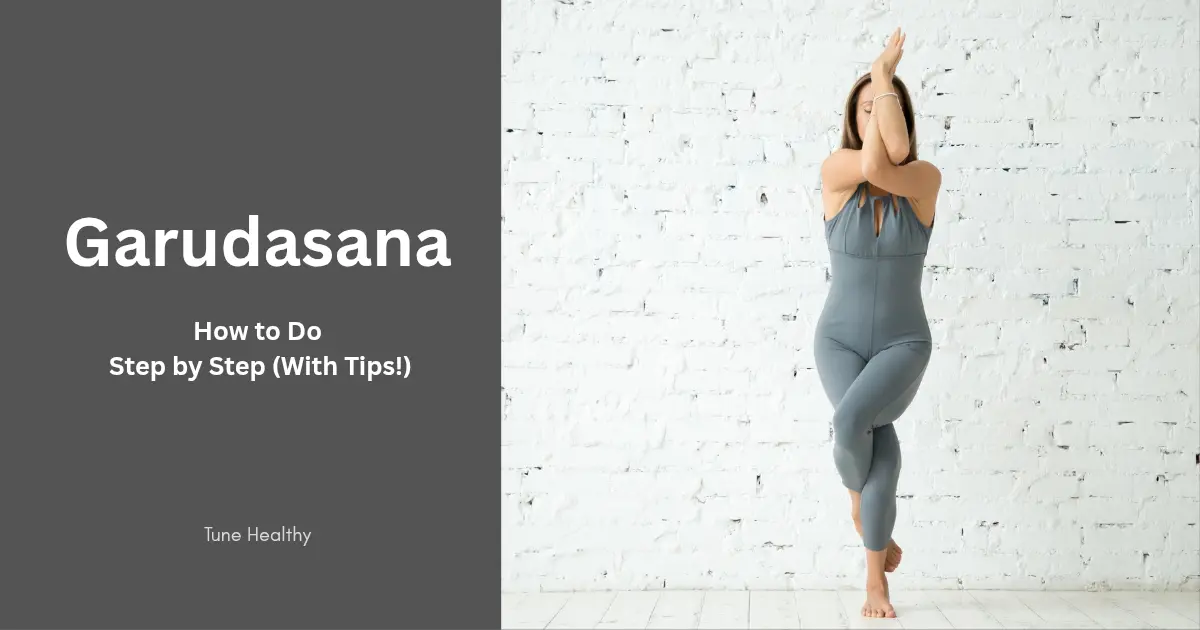
The Eagle, or Garudasana Pose has the appearance of an eagle with its wings spread wide. The Garuda, a powerful bird from Hindu mythology, is the inspiration behind this position. Eagles, or Garudas, are renowned for their strength and speed.
It requires balance, strength, and concentration. You wrap your arms and legs tightly. This makes your body feel strong. You must stay steady and calm. This helps your mind focus and stay present.
Doing this pose makes your legs and arms stronger. It also stretches your shoulders, hips, and upper back. With practice, your balance and posture get better.
Additionally, Garudasana teaches patience. It may be challenging at first, but it becomes simpler with experience. If you need assistance balancing, use a wall or chair. It is safer for new students as a result.
Your mind benefits from this stance as well. You learn to breathe and maintain your composure when you hold the stance. This can help you feel better and reduce stress.
Ready to feel light and strong like an eagle?
How to do Garudasana step by step
Garudasana, or Eagle Pose, can help you feel strong and balanced. Here’s how to do it, step by step.
1. Get Ready: First, warm up your body and move your shoulders, hips, and legs. This helps your joints and muscles get ready for the next steps. Now do some light stretches for more flexibility and help prevent any injuries.
2. Start Standing Tall: Then stand tall in Tadasana, also called Mountain Pose and keep your feet flat and firm on the floor. Spread your toes, which helps you feel steady. Pull in your tummy to make your core strong and engaged. Stand straight and feel balanced.
3. Arm Position: Stretch both arms straight out in front. After this, cross your right arm over your left arm at the elbows. Bend your elbows up. Try to wrap your arms so your palms touch. If your palms can’t touch, press the backs of your hands together. Keep your arms lifted and strong.
4. Leg Position: Bend your knees just a little and put your weight onto your left foot. Now, lift your right leg and cross it over your left thigh. If you can, hook your right foot behind your left calf. Keep your hips facing forward. Try to stay steady on your standing leg.
5. Stand Tall and Strong: Lift your elbows up to shoulder level. Push your arms forward a bit. Pull your shoulders down and back. This opens your chest. Tighten your belly muscles. Lift your head and spine tall. Try not to lean forward or bend.
6. Breathe and Balance: Stay in this pose for a few deep breaths. Look at one still point in front of you. Remember, this is so important because this helps you to keep your balance rightly maintained. Feel the stretch in your legs, arms, and shoulders. Breathe slowly and deeply.
7. Come Out of the Pose: Slowly unwrap your arms and legs, and back to a normal position. Stand straight again in Tadasana. Take a few moments to rest in this position to relax. Now, do the same pose on the other side. Cross your left arm and leg this time.
Physical Benefits of Garudasana
Garudasana, or Eagle Pose, is great for your body. It helps you in many ways. Let’s look at some of the physical benefits.
1. Boosts Joint Flexibility: When you twist your arms and legs in Garudasana, your joints become more flexible. This is true for your shoulders, hips, knees, and ankles. This twisting stretches and strengthens the parts that connect your bones. This helps you move more easily. Over time, your joints will feel less stiff.
2. Makes Muscles Stronger: Holding the Eagle Pose makes your muscles work hard. This is true for your legs, arms, and stomach muscles. When you hold the pose, your muscles get stronger. This helps them last longer and get hurt less often. The pose also strengthens the small muscles that help you stay steady. This makes your body more toned and powerful.
3. Improves Balance and Movement: Garudasana is a perfect pose for better balance and movement. When you do this pose often, your body learns to know where it is in space. This makes you more stable and graceful. Good balance helps you in everyday life too. You are less likely to fall, and you can move with more ease.
4. Helps Blood Flow: In Garudasana, you wrap your arms and legs tightly. This squeezing helps your blood flow better. It helps blood go back to your heart. Good blood flow is good for your heart. It also helps your body get rid of bad things. When blood flows well, your muscles get enough oxygen and food. This helps them recover and feel more alive.
5. Helps Your Body Clean Itself: The way you squeeze and release in Garudasana also helps your body clean itself. This helps your body get rid of waste. This also makes your immune system stronger. A strong immune system helps you fight off sickness. It also helps keep your body’s fluids balanced. This is very important for long-term health.
Mental Benefits of Garudasana
Garudasana, or Eagle Pose, is good for your mind. It helps you in many ways.
1. Better Focus: Garudasana makes you focus well. You need to be very mindful to balance in this pose. This helps your mind become sharper. It can also help you focus better in your daily life. The practice of holding this pose makes your mind clearer. It improves your ability to concentrate on tasks.
2. Calmer Feelings: Balancing poses like Garudasana help calm your nerves. When you balance, you feel more stable. This can make your feelings steadier. The pose can help with stress, worry, and tough feelings. By thinking about the pose, you can calm your mind. This makes you feel less stressed.
3. More Confidence: Doing Garudasana well makes you feel proud. This feeling of success can make you more confident. It helps you face problems with a good attitude. The hard work needed to do this pose makes your mind stronger. This helps you handle life’s challenges better.
4. Stronger Mind-Body Link: This pose makes your mind and body work together. You need to use many muscles and keep your balance. This helps you become more aware of your body. It is good for your mental health. By focusing on how your body moves in Garudasana, you connect your mind and body. This helps your overall health and balance.
Easy Ways to Do Mayurasana (Peacock Pose)
Mayurasana, also called Peacock Pose, can be hard. But there are easy ways to do it. These ways help everyone try this pose. You can change the pose to fit your body.
Bent Knees Variation
Bent knees is a good way to start Mayurasana. It helps if your legs are not very flexible. It makes the pose less hard. You still use your belly muscles. You also work on your balance.
How to do it:
- Start on your hands and knees. Put your hands on the floor. They should be under your shoulders. Point your fingers to your feet.
- Bend your elbows. Push them into your lower belly. This is just above your belly button. Keep your lower arms flat on the floor.
- Tighten your belly muscles. Pull your belly button to your back. Slowly lift one leg. Keep that knee bent.
- When you feel steady, lift the other leg. Keep both knees bent. Focus on staying balanced. Keep your belly tight.
- Hold the pose for a little while. Then, gently put your feet down. Put one foot down, then the other.
Why it helps: This way makes the pose easier. It helps you get strong for the full pose. It also helps you learn safely.
Forearm Variation (Pincha Mayurasana)
The forearm variation is also called Pincha Mayurasana. Here, you balance on your forearms, not your hands. This is good if your wrists hurt. It makes your shoulders stronger.
How to do it:
- Start on your knees. Put your forearms on the ground. They should be shoulder-width apart. Spread your fingers wide.
- Bend your elbows a little. Push them into your lower belly.
- Tighten your belly muscles. Lift one leg straight up.
- When you are steady, lift the other leg. Your body should be straight, like a table. Balance on your forearms.
- Hold the pose. Breathe slowly. To stop, gently put your feet down. Put one foot down, then the other.
Why it helps: This way makes your shoulders and belly very strong. It is good if you have wrist problems. It is a safe way to try the pose.
Wall Support Variation
Using a wall for support is great for new people. It helps you balance. It makes learning Mayurasana easier and safer.
How to do it:
- Start on your hands and knees. Your feet should be close to a wall.
- Put your hands under your shoulders. Point your fingers towards the wall.
- Bend your elbows. Push them into your lower belly. Keep your lower arms flat on the floor.
- Tighten your belly muscles. Lift one leg. Put your foot against the wall.
- Slowly walk your feet up the wall. Lean forward as you do this. Lift your other leg to meet the first. Use the wall to help you balance.
- Balance with the wall helping you. Focus on your belly muscles. Hold the pose for a few breaths.
- To stop, gently lower your feet from the wall. Put one foot down, then the other. Rest in Child’s Pose.
Why it helps: This way helps you get strong and brave enough to do Mayurasana without the wall. It keeps you safe while you learn.
Tips for Mastering Garudasana
- Flexibility and Strength: The Eagle Pose requires a blend of flexibility and strength. Regular practice will improve both over time. Focus on gradual progress, allowing your body to adapt and become more comfortable with the pose.
- Balance: Maintaining balance can be challenging, especially when first learning the pose. Keep your core engaged and use your breath to find steadiness. Practicing near a wall for support can also help.
- Alignment: Proper alignment is crucial to avoid strain and injury. Ensure your knees are slightly bent, and your hips are square to the front. Keep your elbows lifted to shoulder height to open your chest and maintain balance.
Safety and Precautions of Garudasana
Before doing Garudasana, or Eagle Pose, always warm up. Move your shoulders, hips, knees, and ankles. This helps prevent injuries by getting your body ready.
- Be careful if you have joint problems. If your shoulders, knees, or ankles hurt, this pose might make them worse. You might need to change the pose or try a different one.
- If you are new or have trouble balancing, use support. Practice near a wall or with a chair. This stops falls and helps you feel steady.
- Do not stretch too much. Don’t force your body into the pose if it feels tight. Stretching too far can cause harm. Slowly go deeper into the pose over time.
- Focus on your body’s shape. Keep your back long and your belly strong. Don’t lock your knees. Good shape helps keep your body safe.
- Instead of holding your breath, breathe steadily. Deep and calm breaths help you balance and give your muscles the required fresh oxygen.
- If you feel sharp pain, stop the pose. Your safety is most important, even if you can’t do the full pose yet. Always listen to your body.
Conclusion
Garudasana, the Eagle Pose, is special. It asks you to wrap your arms and legs. It also makes you balance. This pose helps your body and mind in many ways.
Doing this pose often makes your joints more flexible. It also makes your muscles stronger. Your balance gets better, and blood flows more easily.
Garudasana also helps you focus. It makes your feelings steadier. You feel a strong link between your mind and body. Try the beautiful Eagle Pose. It can make your yoga practice better. It can also help you feel good all over.
Common Quairys About Garudasana (Eagle Pose)
Q1: What is Garudasana?
A1: Garudasana, or Eagle Pose, is a yoga pose where you stand and balance. You wrap one arm under the other. You also cross one leg over the other. It helps you focus, balance, and be more flexible.
Q2: What good things does Garudasana do for me?
A2: Garudasana makes your joints more flexible. This is true for your shoulders, hips, knees, and ankles. It also makes your muscles stronger. It helps with balance and how well your body moves together. Plus, it makes your blood flow better and helps your body clean itself. It also helps your mind focus and keeps your feelings steady.
Q3: Who should not do Garudasana?
A3: If you have had recent injuries to your shoulders, knees, or ankles, you should not do Garudasana. Or, you can change the pose to be safer. If you are pregnant or have trouble balancing, ask a doctor first.
Q4: How can beginners do Garudasana safely?
A4: Beginners can stand near a wall or use a chair for support. This helps you stay steady. You can also start by not wrapping your legs fully. Just put your lifted foot next to your standing ankle instead of wrapping it around your calf.
Q5: What if I can’t hook my foot behind my calf?
A5: It’s okay if you can’t hook your foot. Just place your lifted foot next to your standing ankle. You can also use a yoga block for support. As you get more flexible and better at balancing, it might become easier.
Q6: Can Garudasana help with stress?
A6: Yes, Garudasana can help with stress. It makes you focus and pay attention. The pose helps calm your mind and makes you feel balanced. This can lower worry and upset feelings.
Q7: How long should I hold Garudasana?
A7: Hold Garudasana for a few breaths. This is usually 15 to 30 seconds on each side. Do what feels good and stable for you. You can hold it longer as you get better.
Q8: Can I change Garudasana if I need to?
A8: Yes, you can change it. You can use a wall for support. You can put your lifted foot next to your standing ankle. You can also use a block. You can even do the arm part and leg part separately if you need to.
Q9: How does Garudasana help my blood flow?
A9: Garudasana squeezes parts of your body. This helps blood flow back to your heart and makes fresh blood move through your body. This is good for your heart and helps your body get rid of bad things.
Q10: What kind of focus do I need for Garudasana?
A10: Garudasana needs deep focus and being mindful. Looking at one fixed point helps you balance.