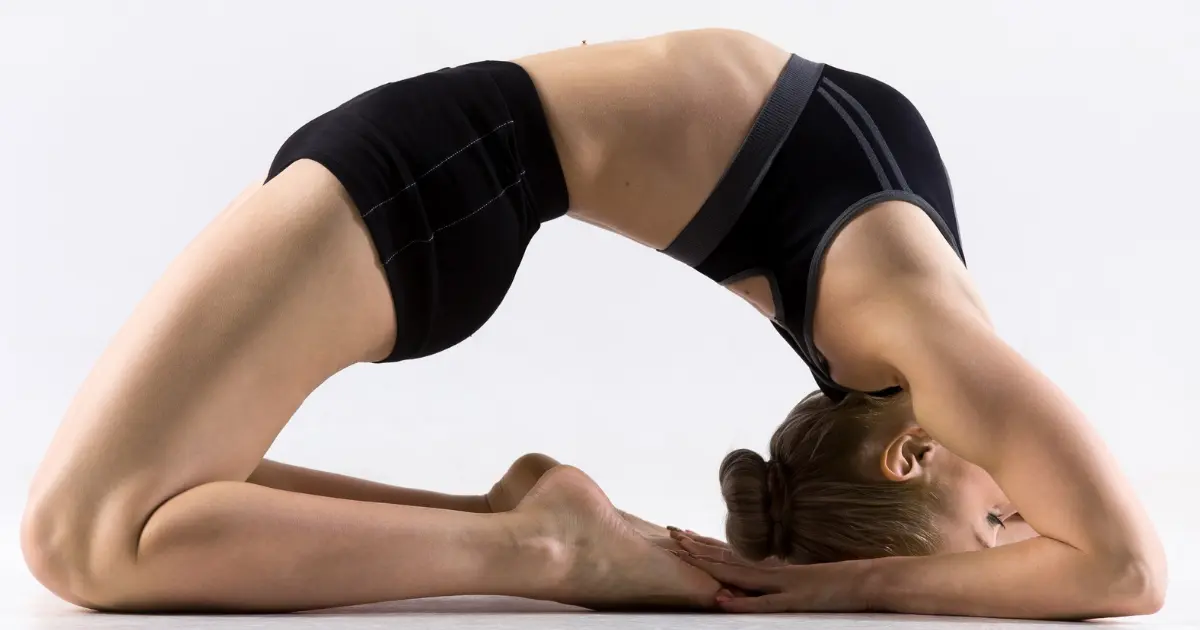
People ask, “What are the benefits of Kapotasana?” when they see the pose’s deep stretch and strong shape. So the truth is, this is a pose that appears to be magic. Kapotasana can transform both your body and mind. It is strong, open, and full of grace. Many call it “the pose that defies gravity.” It is one of the deepest backbends in yoga. It also shows how open the body and the heart can become with practice.
In Sanskrit, Kapotasana means “Pigeon Pose.” It is also known as “King Pigeon Pose.” This is not the same as the beginner version (Eka Pada Rajakapotasana). Kapotasana is much harder. It needs deep strength, balance, and flexibility.
This pose opens the hips and the chest. It stretches the whole front of the body. It also deeply works on the spine. It is a powerful pose used in many advanced yoga paths. In Ashtanga Yoga, Kapotasana is part of the second series. But it is also taught in other styles for experienced students.
This post will help you understand Kapotasana better. You will learn what it does for your body and mind. We will go through the benefits, how to prepare, how to do it step by step, and how to modify it. You will also learn the common challenges and how to stay safe.
Important: Kapotasana is not for beginners. Always listen to your body. Do not force anything. Use props and support. And please learn from a trained yoga teacher if you are new to this pose. Your safety and awareness are the most important part of any yoga practice.
What is the spiritual meaning of Kapotasana?
Kapotasana, or Pigeon Pose, has a deep spiritual meaning. It opens the heart and chest, helping release hidden emotions. This pose is linked to love, forgiveness, and letting go of past pain. It also helps connect the mind and body. Many people feel lighter and more peaceful after doing this pose with deep, calm breathing.
What does pigeon pose do for your body?
Kapotasana stretches and strengthens many parts of your body. It’s a deep pose that helps you open up.
- Muscles that Stretch: This pose mainly stretches the muscles at the front of your hips, like the psoas. It also stretches your front thigh muscles, called the quadriceps. You’ll feel a good stretch in your chest and shoulders too, helping them open.
- Muscles that Get Stronger: Kapotasana helps make your back muscles strong, especially those that help you stand tall. It also works your core muscles, keeping your body steady and balanced.
- How Your Joints Move: When doing pigeon pose, your hips do two things: they turn out to the side and extend backwards. Your spine also bends backwards, mostly in your lower and upper back. This pose is great for opening the front of your body and also making your back strong.
What chakra is Kapotasana?
Kapotasana (Pigeon Pose) primarily opens the Anahata Chakra (heart chakra). It also helps balance the Vishuddha Chakra (throat chakra) and Ajna Chakra (Third Eye Chakra), promoting emotional release, clear communication, and spiritual connection.
What Are the Benefits of Kapotasana?
Kapotasana (Pigeon Pose) opens the chest and hips. It makes the spine more flexible. This pose helps reduce back pain. It improves posture and breathing. Kapotasana also calms the mind. It can release deep tension from the body. Regular practice makes you feel strong, open, and more peaceful.
Let’s look at the physical and mental benefits of Kapotasana in detail:
Physical Benefits of Pigeon Pose
- Opens the hips deeply: Kapotasana gives a deep stretch to the hips. This helps release tightness and tension. Many people have stiff hips because of long sitting hours. This pose helps relax them.
- Increases spinal flexibility: This pose bends the spine backwards. It stretches the spine deeply. Over time, it increases the range of motion. Your spine feels more open and strong.
- Strengthens the back muscles: While doing this pose, the back muscles must work. This helps build strength in the back. A strong back supports better posture and less pain.
- Improves posture: Kapotasana pulls the chest forward and the shoulders back. This creates a tall and open posture. Good posture helps you breathe better and feel more confident.
- Opens the chest and shoulders: This pose stretches the front body. It opens the chest and shoulders. This allows the lungs to expand fully. Breathing becomes deeper and easier.
- Stretches the quads and psoas: Kapotasana stretches the front thighs and the psoas muscle. These muscles get tight from sitting or running. Stretching them helps reduce tightness and improve movement.
- May reduce sciatica pain: The pose opens the hips. For some individuals, this can help alleviate pain associated with sciatica. But it should be done carefully. Always listen to your body.
Mental and Emotional Benefits of Pigeon Pose
- Releases deep emotions: We often store emotions in our hips. When we open our hips, these feelings can emerge. Kapotasana can help release sadness, fear, or tension.
- Builds patience and strength of mind: This pose is intense. You need to stay calm and focused. Practising it teaches patience and mental strength.
- Improves body awareness: Kapotasana makes you feel every part of your body. You learn to notice small details—like your breath, balance, and muscle use. This builds mindfulness.
- Encourages openness and courage: In this pose, your heart is wide open. This physical openness can bring emotional openness too. It teaches you to be brave and to trust.
- Reduces stress and anxiety: Deep breathing in this pose helps calm the mind. It can lower stress and anxiety. You feel lighter and more relaxed afterwards.
Therapeutic Applications of Kapotasana (with care)
- Eases mild back pain: When done safely, this pose can help reduce light back pain. It strengthens the muscles around the spine and improves flexibility.
- Helps with digestion: The deep backbend puts a light pressure on the belly. This can support digestion and help with stomach issues.
- Boosts blood flow: Kapotasana opens the chest, hips, and spine. This helps improve blood flow in the whole body. Good circulation helps you feel more alive and healthy.
Kapotasana is a strong and deep yoga pose. It needs care and practice. But it has many benefits physically, mentally, and emotionally. It helps the body stretch, grow strong, and feel open. It also helps the mind to calm down.
What are the preparatory poses for Kapotasana?
Kapotasana (Pigeon Pose) is a very deep backbend yoga pose. That’s why your body needs to be ready for it. Your spine, hips, and shoulders must be flexible and get a proper warm-up before trying this pose.
- Bhujangasana (Cobra Pose): By doing this pose, your chest will be open. It gently stretches your lower back and makes you feel comfortable bending your back.
- Dhanurasana (Bow Pose): This pose stretches the whole front of your body. It also makes your back muscles stronger.
- Setu Bandha (Bridge Pose): This is a gentle backbend type of yoga. It prepares your spine and hips for bigger stretches.
- Supta Virasana (Reclining Hero Pose): Supta Virasana opens your hips and thighs. It also stretches your stomach area and helps you become more flexible.
- Virasana (Hero Pose): Your knees and hips are ready by doing the Hero Pose. It also helps you feel your body better and get the right shape.
- Urdhva Dhanurasana (Upward Bow or Wheel Pose): This is a strong backbend. It opens your chest and shoulders, just like Kapotasana.
- Eka Pada Rajakapotasana (One-Legged King Pigeon Pose): This pose stretches your hips deeply. It gets you ready for the full Kapotasana pose.
Practice these poses often. They will help your body get ready for Kapotasana slowly and safely.
How to do Kapotasana step by step?
Kapotasana is a deep backbend. It helps open your chest and stretch your body. This pose needs a warm-up and care. Always go slow. Listen to your body. Breathe deeply and stay calm.
Starting Position: Begin by crouching on your yoga mat. Your knees should be hip-width apart. Put both hands beside your feet or on your hips. Now look forward and maintain a straight back. To relax and be ready for the position, take a few deep breaths.
Now, starting the Pose (Step-by-Step):
The backend starts in your upper back. It’s not enough to bend at the waist. Try expanding your chest and upper back first (thoracic spine). This will help protect your back from harm.
- Reach your arms back slowly: Try to reach for your heels or ankles. Move carefully. Keep breathing. You may feel a deep stretch in your chest and thighs.
- Drop the head gently: Let the crown of your head move toward your feet. Do not put pressure on your neck. Stay soft and relaxed in your face and jaw.
- Place your hands on your feet: If possible, place your hands on your heels. If you feel stable, you can bring your hands to the floor. Go only as far as you feel safe and strong.
- Lift your chest high: Push the chest upward. Roll the shoulder blades together and down. This gives space to the heart and lungs and helps deepen the pose.
- Engage your inner thighs: Pull the thighs slightly inward. This keeps the hips from spreading too much. Thus, it protects your lower back and knees also.
- Hold the pose few breaths: Come out of the pose slowly by bringing your hands back to your hips and lifting your torso gently. Rest in a child’s pose afterwards to relax your spine.
Exiting Kapotasana Safely:
Coming out of Kapotasana is very important. You must protect your spine and knees.
Move your hands back slowly. Bring your head up gently. Lift your chest and sit up straight. Do this with control. Do not rush when you come out. Take your time. Breathe deeply as you move.
After a deep backbend, do a gentle forward bend. Child’s Pose (Balasana) is a good choice. It helps relax your spine. You can also do a simple seated forward fold. This will relax your back and hips. Always listen to your body. If you feel any sharp pain, stop and rest. Kapotasana is a deep pose. Practice with patience. Be kind to your body.
Variations, Modifications, and Props
Kapotasana is a yoga pose where you bend your back deeply. It’s also known as Pigeon Pose or King Pigeon Pose. Not everyone can do the full pose right away. That’s okay! We can use different ways to help, like changing the pose or using props.
Starting Steps:
Before you try the full pose, you can do easier steps. These help you get ready.
One way is to put your hands on yoga blocks. This makes it easier to reach the floor. You don’t have to bend as far.
You can also use a yoga strap. Wrap it around your feet. This helps you hold onto your feet if your hands can’t reach them. The strap acts like longer arms.
Using a wall is another good idea. Face the wall and slowly slide your hands down it. The wall gives you support. It helps you get better at bending your back safely.
Going Deeper:
If you can do Kapotasana easily, you can try to go deeper.
Try holding the pose for a longer time. Start with 10 seconds. Then, slowly add more time as you get stronger.
You can also change how you hold your hands. First, try reaching for one foot at a time. Then, try reaching for both feet together.
Some very experienced yogis can move into this pose from standing up. But only try this if your back and legs are very strong and flexible.
Changes for Your Body:
Everyone’s body is different. Some people have tight hips or thighs.
If your hips or thighs feel tight, do more warm-up stretches. Lunges are among the helpful poses. These areas can also be stretched in Pigeon Pose.
Use your core muscles if you feel like your lower back is being pinched. Pull your belly button gently in the direction of your spine. Your back feels supported by this.
What props are needed for Pigeon Pose?
Props are incredibly useful tools. They improve your comfort and safety in the posture.
You can put blocks in your hands. Additionally, they can go under your feet. This lessens the intensity of the stretch. It also aids with equilibrium.
If your hands are unable to reach your feet, straps can be helpful. They provide a means of holding on.
Under your knees, blankets are fantastic. They soften it and shield your joints. You can also roll a blanket and put it under your ankles for support.
Common Challenges and Troubleshooting
Kapotasana is a yoga pose. It is a deep backbend. Many people find it hard. Here are some common problems. We also share how to fix them.
Lower Back Pain:
If your spine is not long enough, you may feel pain in your lower back.
Solution: Use your stomach muscles. Pull your belly in. Lift your chest. Try to bend your upper back more. Do not just bend your lower back. Go slowly. Keep breathing.
Can’t Reach Your Feet:
If your thighs or hips are tight, you may be unable to hold your feet.
Solution: Use a yoga strap. Put it around your feet. This helps you hold the pose safely. Do warm-up poses. Try a low lunge and camel pose. Practice daily. You will become more open.
Knee Pain:
If your body position is poor or you are pushing too hard, your knees might hurt.
Solution: Put a soft pad or a folded blanket under your knees. Keep your hips even. Do not force the pose. Move with care. Stop if the pain stays. Ask an expert teacher for help.
Fear and Mental Blocks:
Many people are afraid of deep backbends. This is normal, though. The pose feels very open. This can be scary.
Solution: Be patient with yourself and start with easier backbends. After getting stronger and building your trust, you can try this. Focus on your breath. Breathe slowly to stay calm. Believe in your progress.
What are the common mistakes in Pigeon Pose?
Pigeon Pose is great for opening the hips. But many people make some common mistakes. These can cause pain or stop you from getting the full benefit.
- One big mistake is forcing the front leg. Your front shin does not have to be parallel to the mat. Keep it where it feels safe.
- Another mistake is letting the back leg turn out. Your back leg should point straight back. If it turns out, your hips twist and you lose balance.
- Many people also let their hips fall to one side. Try to keep your hips even. You can place a block or cushion under your hip for support.
- Some people round their backs too much. Keep your spine long and chest open. Don’t collapse forward too fast.
Mindful Practice and Safe Progression
Always listen to your body. If something hurts, stop right away. Yoga should not cause pain. Slow and steady is better than fast and strong. Doing yoga often is more helpful than doing too much at once. A good yoga teacher is important, especially for hard poses. They can guide you and keep you safe. Your breath is your best friend in yoga. Breathe slowly and deeply. Let your breath help you stretch and relax. It keeps your mind calm, too. Stay patient, be kind to your body, and enjoy your practice every day.
Last Words
Kapotasana is a strong yoga pose. It opens your body and heart. This pose makes you stronger and more flexible. It also helps you feel calm and focused. The pose can be hard, but it’s worth it. Be patient with yourself. With practice, you will get better.
Remember, yoga is not about being perfect; it’s about being present and growing daily. Trust your yoga journey and enjoy every step. Keep your heart open. Let your practice lead you. Yoga is a path for life. Stay committed and stay inspired.
FAQs
Q 1. What are some common mistakes in Pigeon Pose?
Ans: Common mistakes include forcing the front leg, letting the hips tilt to one side, and holding your breath. Few yogi round their back too much. Keep your hips square and use props if needed. Go slow.
Q 2. What are the disadvantages of Pigeon Pose?
Ans: If not done correctly, Kapotasana may strain the knees or hips. It may feel painful for people with tight muscles. Forcing the pose can also lead to injury. Remember, it’s not ideal for everyone, especially beginners without any guidance or support.
Q 3. Why is Pigeon Pose so difficult?
Ans: Pigeon Pose is hard because it needs open hips, strong core, and flexible legs. Many people sit all day, so their hips are tight. The deep stretch can feel intense. It takes time and practice to do it safely and comfortably.
Q 4. Who should avoid Pigeon Pose?
Ans: People with knee pain, hip injuries, or lower back issues should avoid it. Pregnant women and those with recent surgeries should skip it too. Always talk to a doctor or yoga teacher before trying this pose if you have any health concerns.
Q 5. What happens if I do Pigeon Pose every day?
Ans: Doing Pigeon Pose daily can increase hip flexibility and reduce tension. It may ease stress and improve posture. But doing it wrong can cause pain or injury. Always warm up first, use support, and never push into pain.
Q 6. Is Pigeon Pose bad for osteoporosis?
Ans: Yes, it can be risky. Pigeon Pose puts pressure on bones and joints, which may harm people with osteoporosis. It’s better to choose gentle, supported poses. Always ask a doctor or yoga expert before doing such deep stretches.
Q 7. What is better than the Pigeon Pose?
Ans: Reclined Figure-Four Pose is a safer option. It gives a similar hip stretch while protecting the knees and back. You lie on your back and cross one ankle over the opposite knee. It’s gentle and easy for most people.
Q 8. How long do I stay in Pigeon Pose?
Ans: Start with 30 seconds to 1 minute on each side. As you get more comfortable, you can stay for up to 3 minutes. Use a timer and breathe deeply. Never hold it if you feel sharp pain or discomfort.
Q 9. Is Pigeon Pose good for sciatica?
Ans: It can help relieve sciatica in some cases by stretching tight muscles around the sciatic nerve. But it’s not safe for everyone. If it causes pain or numbness, stop right away. Talk to a doctor or therapist before using it for sciatica.
Q 10. How to cue into Pigeon Pose?