
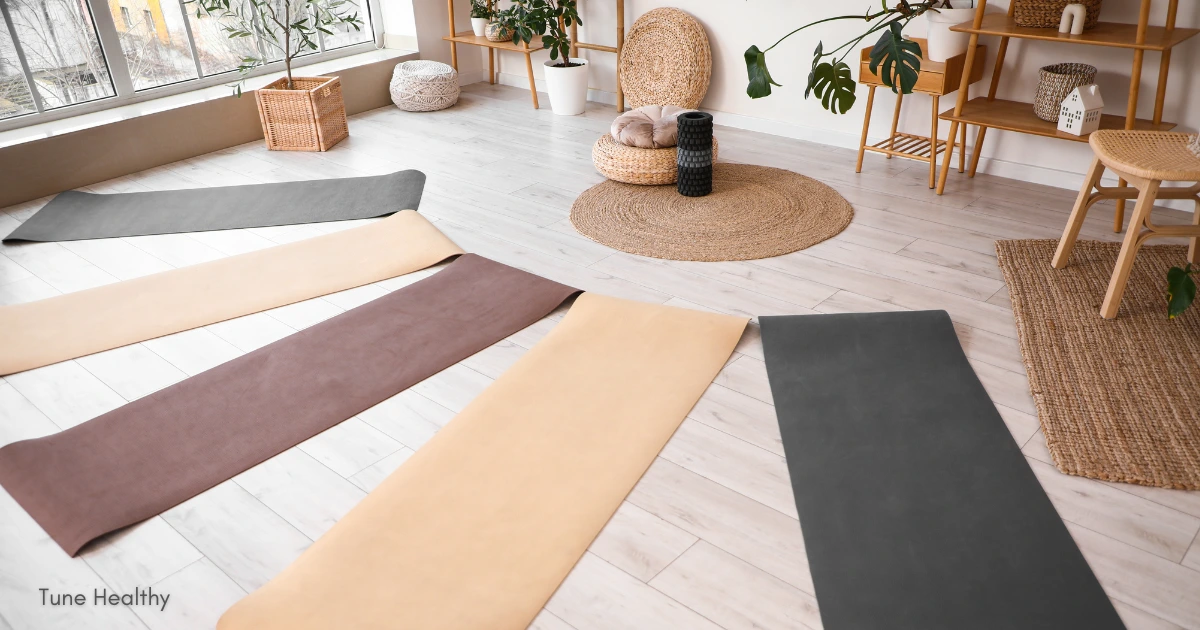
If you’re looking for the top 10 sustainable yoga mat options that support both your practice and the planet, you’re in the right place.
As a yoga teacher and long-time practitioner, I’ve tested many mats over the years—from budget options that lost grip quickly to durable mats that stayed supportive through daily practice.
A sustainable yoga mat is more than eco-friendly materials. It should also feel good under your hands and feet. Grip, comfort, cushioning, durability, and lower-toxin materials all matter when choosing a mat you’ll use every day.
In this guide, I’ll share the best sustainable yoga mat picks for home practice, hot yoga, studios, and travel. I’ll also explain what makes a mat truly sustainable, how to choose the right thickness, and which options offer the best value for your money.
1. Jade Yoga Harmony Mat

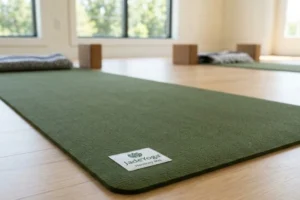
Jade Yoga is a true pioneer in the eco-friendly fitness world. I like the Jade Yoga Harmony Mat because it offers an incredible, slip-free grip. It is made right here in the United States from natural tree rubber, a renewable resource.
Traditional plastic mats feel slick when your hands get sweaty, but natural rubber grabs onto you securely. Think of it like a pair of high-performance car tires on a rainy road. Natural rubber may help create a more stable feeling during longer holds.
-
Materials: 100% natural tree rubber.
-
Thickness: 4.7 mm (perfect for standard joint support).
-
Why It Wins: Jade Yoga plants a tree for every single mat they sell, and they have already planted over one million trees!
-
Where to Buy: Check prices on amazon.com.
2. Scoria Botanical Cork Mat
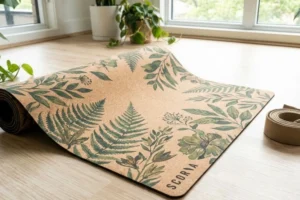
If you want something unique and completely plastic-free, the Scoria Botanical Cork Mat is beautiful. This mat features a natural cork top surface and a sturdy tree rubber backing. The layers are bonded together using water-based eco-adhesives rather than toxic glues.
Cork is a wonderful choice for an eco-friendly practice. It is harvested by stripping the bark off cork oak trees, and the bark simply grows back over time. Cork contains a natural waxy substance that makes it highly resistant to moisture, mould, and odours.
-
Materials: Sustainable-harvested cork and natural rubber.
-
Thickness: 4.5 mm.
-
Why It Wins: Cork gets grippier when it gets wet. If you do hot yoga, you can skip the towel entirely because your sweaty hands may feel more secure during practice.
-
Where to Buy: Check prices on Amazon.com.
3. Manduka eKO Mat
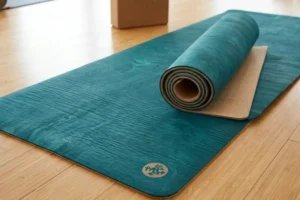
Manduka is famous for making durable yoga mats that last for decades, and their eKO line is an eco-friendly masterpiece. It is made with lower-impact materials and natural tree rubber, harvested outside the Amazon rainforest.
During testing, I liked the closed-cell surface texture on this model. It prevents sweat from soaking deep into the mat, which may help reduce sweat absorption and make the mat easier to keep clean. It has a beautiful, rippled texture that mimics the surface of water, giving you extra traction.
-
Materials: Natural rubber with a blend of polyester and organic cotton.
-
Thickness: 5 mm (great for extra comfort).
-
Why It Wins: This is among the more durable options we tested. It held up well during repeated practice sessions and showed minimal wear over time, even if you practice every single day.
-
Where to Buy: Check prices on Amazon.com.
4. Ananday Cork Yoga Mat
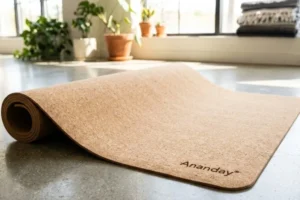
Ananday is a fantastic option if you want a clean mat that focuses on reducing waste through material and packaging choices. One side is premium cork, and the back is pure tree rubber. The two layers are bound together under high-temperature pressure, so the factory uses no chemical glues or dyes at all.
When I first tested this mat, we noticed it had a faint, earthy rubber smell that faded within a couple of days. It is completely free of synthetic foams and arrives at your door in plastic-free packaging. It is a solid, premium piece of gear that feels incredibly supportive under your knees.
-
Materials: 100% raw cork and natural tree rubber.
-
Thickness: 4 mm.
-
Why It Wins: It is a reversible mat. You can use the cork side for high-sweat-flow sessions or flip it to the rubber side for maximum dry traction.
-
Where to Buy: Check prices on Amazon.com.
5. Oko Living Herbal Yoga Mat
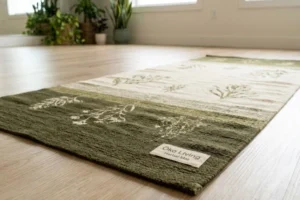
If you want to step away from rubber and foam entirely, Oko Living makes a stunning woven rug mat. It is hand-loomed in India using certified organic cotton. The threads are dyed using medicinal Ayurvedic herbs like neem, turmeric, and holy basil.
This mat feels like a soft, comforting blanket under your skin, but it is sturdy enough for a dynamic practice. It provides a gentle aromatherapeutic experience as you move through your postures. It is the ultimate expression of the best sustainable yoga mat for traditionalists.
-
Materials: GOTS-certified organic cotton and natural plant dyes.
-
Thickness: 3 mm (classic loomed rug texture).
-
Why It Wins: It is machine washable, and the plant dyes contribute to its natural aesthetic and traditional feel.
-
Where to Buy: Check prices on amazon.com.
6. Gaiam Premium Eco-Friendly TPE Mat
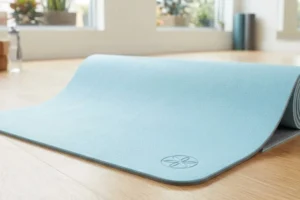
We know that spending a lot of money on a natural rubber mat is not possible for everyone. If you are shopping on a tight budget, you can find great, cheap yoga mats that are still safe for the earth. The Gaiam Premium TPE mat is a wonderful budget option.
Thermoplastic Elastomer (TPE) is a synthetic blend, but it is designed without PVC and positioned as a lower-impact alternative. Many people choose TPE as a lower-impact alternative to traditional PVC mats. It is extremely lightweight, which makes it easy to carry to your local studio.
-
Materials: Non-toxic, PVC-free Thermoplastic Elastomer.
-
Thickness: 6 mm (excellent for sensitive joints).
-
Why It Wins: It gives you incredible cushion for a fraction of the cost of raw tree rubber, making it highly accessible.
-
Where to Buy: Check prices on amazon.com.
7. 42 Birds “The Robin” Cork Mat
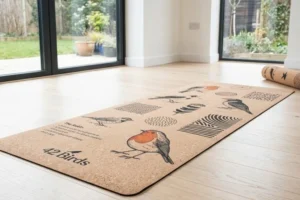
The 42 Birds mat is specifically designed for people who love minimalist aesthetics and lightweight gear. Many rubber-backed mats weigh over five pounds, but this model uses a lightweight recycled foam base attached to a top layer of premium cork.
It weighs only 2.5 pounds, which makes it a highly convenient option to transport. It stays flat on the floor right after you unroll it. The texture is smooth to the touch, and it does not give off any plastic chemical odors.
-
Materials: Sustainable cork and a PVC-free recycled foam base.
-
Thickness: 5 mm.
-
Why It Wins: It balances the natural antimicrobial benefits of cork with an ultra-lightweight design that will not hurt your shoulders on your commute.
-
Where to Buy: Check prices on amazon.com.
8. Manduka eKO Superlite Travel Mat
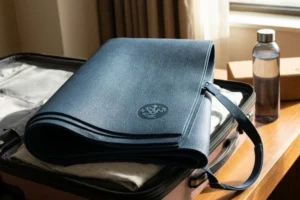
For the nomads and frequent flyers, finding a good sustainable travel yoga mat is a game-changer. The Manduka eKO Superlite is paper-thin and weighs just about two pounds.
Instead of rolling this mat, you can fold it up like a t-shirt and pack it right into your backpack or suitcase. You can place it directly over a rental mat at a hotel gym to create a clean, personal barrier. It is made of the same high-quality natural rubber as the full-sized Manduka mats.
-
Materials: Non-Amazon harvested natural tree rubber.
-
Thickness: 1.5 mm (ultra-thin for travel).
-
Why It Wins: It offers a professional-grade grip in a package that fits easily into a carry-on bag.
-
Where to Buy: Check prices on amazon.com.
9. Brentwood Home Organic Yoga Mat
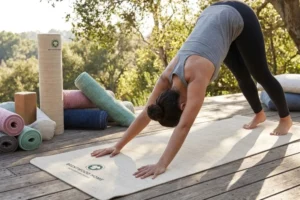
Brentwood Home is famous for their green mattresses, and they bring that same expertise to their yoga line. This mat is crafted from certified organic cotton and features a non-slip base made of 100% natural latex.
It feels like a heavy-duty woven canvas towel. It is incredibly durable and built to withstand years of heavy sweat. It is an amazing choice for restorative yoga, yin yoga, or intense hot vinyasa sessions where you need a material that absorbs sweat naturally.
-
Materials: GOTS-certified organic cotton and natural latex.
-
Thickness: 4 mm.
-
Why It Wins: It is designed with sustainability goals in mind and focuses on durable materials intended for long-term use.
-
Where to Buy: Check prices on amazon.com.
10. Yoloha Native Cork Yoga Mat
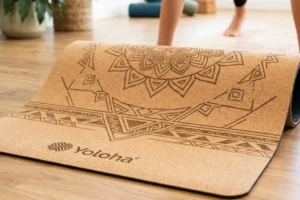
Yoloha was one of the very first companies to create cork yoga gear. Their Native mat uses a patented foam base that is made from plant-based materials and recycled foam.
This mat provides a soft, cloud-like bounce that may feel more comfortable under the wrists during arm balances. If you love thick yoga mats but still want something that respects the planet, this is the perfect middle ground. It is completely free of PVC, plasticizers, and harsh chemical elements.
-
Materials: Premium sustainable cork and a plant-backed eco-foam base.
-
Thickness: 6 mm (extra thick for premium joint padding).
-
Why It Wins: The extra thickness does not make it heavy, so you get incredible comfort without the bulk.
-
Where to Buy: Check prices on amazon.com.
How We Tested These Sustainable Yoga Mats
To create this list, I focused on the things that matter most during real yoga practice. I looked at grip, cushioning, durability, comfort, weight, material quality, and overall value.
I also compared how each mat performed during different styles of movement, including gentle stretching, longer holds, and higher-sweat sessions.
When reviewing sustainability claims, I looked at materials, packaging choices, and brand transparency instead of relying only on marketing language.
Because product materials and certifications can change over time, always check the manufacturer’s latest specifications before buying.
Evaluation Criteria:
- Grip and traction
- Cushion and joint comfort
- Weight and portability
- Material sustainability
- Durability over time
- Ease of cleaning
- Overall value
Best Sustainable Yoga Mat at a Glance
| Need | Recommended |
|---|---|
| Best Overall | Jade Yoga Harmony |
| Best Cork | Scoria |
| Best Budget | Gaiam Eco |
| Best Travel | Manduka eKO Superlite |
| Best Cushion | Yoloha Native |
How to Choose Your Perfect Sustainable Mat
When you are looking for the top 10 sustainable yoga mat choices, you need to match the materials to your specific style of movement. Here is a quick guide to help you choose the right material for your home studio.
| Material Type | Best For | Key Advantage | Care Requirement |
| Natural Rubber | Dynamic Vinyasa, Ashtanga | Excellent dry grip | Wipe with damp cloth; keep out of direct sun |
| Natural Cork | Hot Yoga, High Sweat | Grippier when wet; antimicrobial | Roll with cork facing out; do not fold |
| Organic Cotton | Yin, Meditation, Restorative | Soft on skin; machine washable | Wash on gentle cycle; air dry |
| Eco-TPE | Beginners on a budget | Very lightweight; low cost | Wipe down after use; avoid high heat |
If grip is your top priority, start with rubber or cork. If comfort matters most, consider thicker mats around 5–6 mm. Choosing a durable yoga mat may help reduce replacement waste while giving you a more comfortable practice.
Choosing mats with fewer synthetic materials may help reduce exposure to strong manufacturing odors and support lower plastic use over time. Find the texture and thickness that works for you, and enjoy a more grounded practice today.
Common Mistakes When Buying a Sustainable Yoga Mat
Many people focus only on eco-friendly labels and forget how the mat actually feels during practice.
Here are a few common mistakes to avoid:
Choosing the thickest mat
Extra cushioning feels comfortable, but very thick mats may reduce balance in standing poses.
Ignoring grip
If your hands get sweaty, prioritize cork or natural rubber.
Forgetting mat weight
Heavy mats work well at home but may feel inconvenient for commuting.
Not checking care instructions
Some materials need special cleaning or storage to last longer.
Buying only based on price
A mat that lasts for years may offer better value than replacing cheaper mats often.
Frequently Asked Questions
What is the most sustainable material for a yoga mat?
Natural rubber, cork, and organic cotton are commonly chosen because they use renewable or lower-impact materials.
Are cork yoga mats better than rubber mats?
Cork may perform well in sweaty sessions, while rubber often provides stronger dry grip.
What thickness is best for a yoga mat?
Around 4–5 mm works well for many people. Thicker mats may feel softer, while thinner mats often improve stability.
How long should a yoga mat last?
That depends on material quality, usage, and care. A well-maintained mat may last for years.
Are sustainable yoga mats worth it?
If comfort, durability, and lower-impact materials matter to you, they may be a worthwhile long-term investment.
Disclaimer: Product materials and certifications may change over time, so always check the manufacturer’s latest specifications before buying.