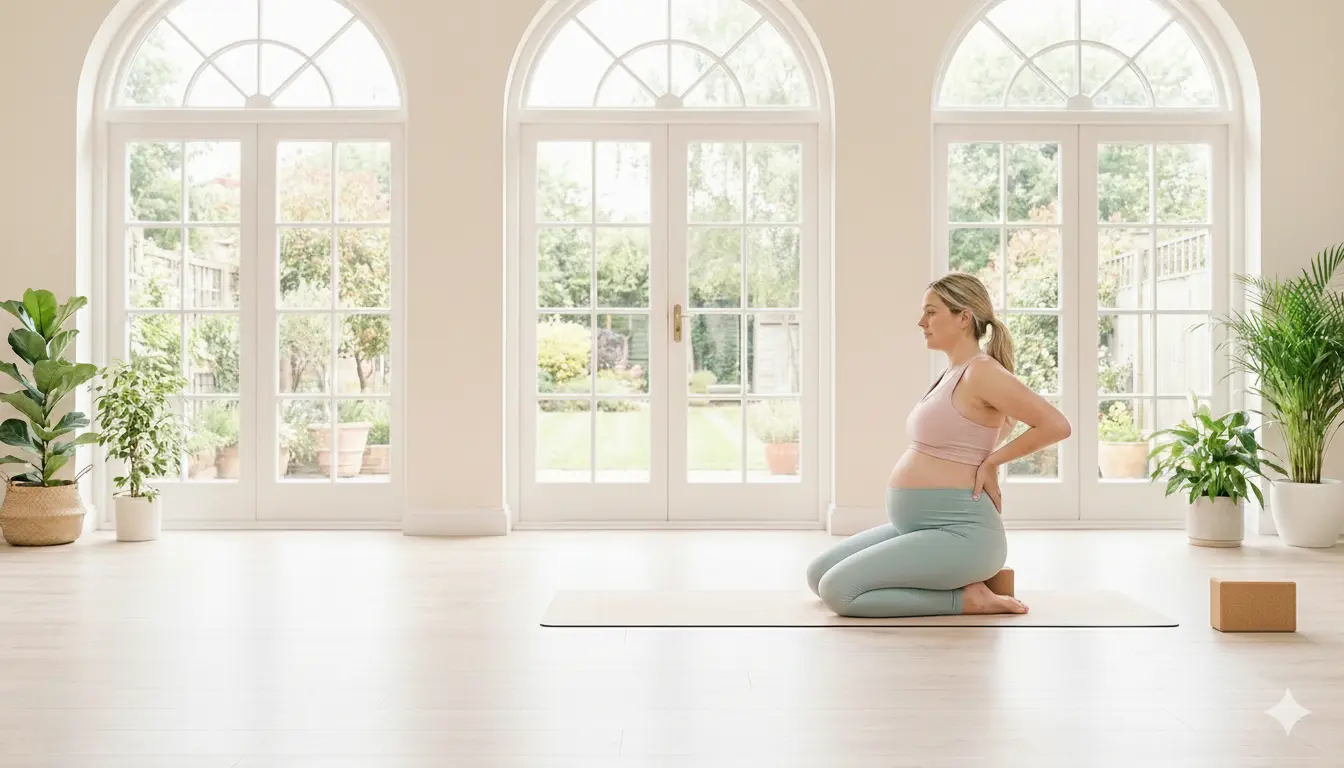
Pelvic pain is very common during pregnancy. Many moms feel sharp aches, pressure, or heaviness in the hips, groin, or lower back. These feelings can make walking, sitting, turning in bed, or even doing daily tasks hard. But you are not alone, and your body is not failing you. Your body is simply changing, opening, and preparing for birth.
The good news is that prenatal yoga for pelvic pain offers a soft, natural way to feel better. Gentle movement reduce pressure on the joints and relax tight muscles. It’s help your body to find balance again. With the right poses and slow breathing, you can ease pain, support your posture, and help your pelvis feel more stable.
In this guide, you will learn:
- Why pelvic pain happens
- Types of pelvic pain
- Safe yoga poses
- Breathing exercises
- Trimester-based modifications
- A full 10–15 minute routine
- Expert tips and safety rules
Let’s take this slow. Your body deserves care, comfort, and kindness.
What Is Prenatal Yoga for Pelvic Pain?
Prenatal yoga for pelvic pain is a soft, supportive way to help your body feel safer and more stable during pregnancy. It uses slow movements, simple poses, and calm breathing to release tension around the hips and pelvis. This practice helps you move with less pain and more confidence each day.
Why Pelvic Pain Happens During Pregnancy
Pregnancy brings big changes, and the pelvis carries much of that load. Pelvic pain often happens because:
Hormones like relaxin loosen the joints, making them less stable
Weight gain shifts posture, pulling the pelvis forward
Baby’s position adds pressure on joints and muscles
Weak or tight muscles cannot support the pelvis well
Poor sleep positions strain the hips and lower back
Each of these changes is normal, but together they create extra stress on the pelvis.
Symptoms of Pelvic Pain During Pregnancy
Pelvic pain is very common during pregnancy, and many women feel it at different stages. Some feel it in the first trimester, while others notice it as the belly grows. This pain feels light, sharp, heavy, or pulling. Every woman experiences it in her own way, but it often affects simple daily movements. You may notice:
A dull ache in the lower back
Sharp pain in the inner thighs
Pressure or heaviness around the pubic bone
Burning, pulling, or tightness in the groin
Pain when walking, rolling in bed, getting out of a car, or lifting one leg
These symptoms feel scary or confusing. But when you understand what type of pain you are dealing with, you can choose better support, better movement, and safer prenatal yoga poses.
Types of Pelvic Pain During Pregnancy
Pelvic pain is not just one thing. There are different types, and each type has a unique pattern. Learning the difference helps you avoid unsafe moves and focus on gentle poses that help your body stay stable.
Pelvic Girdle Pain (PGP): This pain sits around the back of the pelvis, hips, or buttocks. Many women feel it when walking, climbing stairs, or standing for too long. It often feels like the pelvis is “pulling apart.”
Pubic Symphysis Dysfunction (PSD): This causes sharp or stabbing pain near the pubic bone. It may hurt when lifting one leg, turning in bed, getting dressed, or stepping over something. Some mothers also hear a “clicking” sensation near the pubic bone.
SI Joint Pain: You feel this pain near the small dimples at the back of the pelvis. Simple tasks such as standing on one leg, bending, or twisting can make it worse. It often spreads into the buttocks or thighs.
Hip Pain: This feels like a deep ache inside the hip muscles. It can happen from tight hips, long sitting hours, or poor body alignment. Many women feel it more at night.
Lower Back Pain Linked to the Pelvis: When the pelvis tilts forward or becomes unstable, the lower back has to work harder. This creates pressure and discomfort around the spine and tailbone.
How Prenatal Yoga Helps
Prenatal yoga offers gentle, safe ways to ease this discomfort. The slow movements help release tight muscles, while the breathing keeps the body calm. With the right poses, prenatal yoga:
Improves alignment
Reduces muscle tension
Supports pelvic stability
Encourages healthy movement patterns
Helps you feel lighter and steadier
With practice, you can move with more ease and feel supported through every stage of pregnancy.
Top 5 Prenatal Yoga for Pelvic Pain Relief
Here we choose only five safe yoga poses for the expectant moms suffering from palvic pain. This are five crucial poses that can definitely help you feel better.
1. Cat-Cow Pose (Chakravakasana)
How it helps: Releases lower back tension and supports pelvic mobility.
Steps:
- Come to hands and knees.
- Inhale, drop your belly and lift your head (Cow).
- Exhale, round your back (Cat).
- Repeat for 1–2 minutes.
Tips:
- Keep knees under hips.
- Move slowly.
2. Wide-Legged Child’s Pose (Balasana)
How it helps: Opens hips and calms the mind.
Steps:
- Kneel and widen your knees.
- Sit back on your heels.
- Lower your chest.
- Rest your forehead and breathe.
Tips:
- Use a pillow under your chest.
- Stay for 1–2 minutes.
3. Bridge Pose with Support (Setu Bandhasana)
How it helps: Strengthens glutes and reduces pelvic pressure.
Steps:
- Lie on your back with bent knees.
- Lift your hips.
- Place a block under your sacrum.
- Keep breathing slowly.
Tips:
- Only do this if approved by your doctor. Crucially, ensure the block is placed under the sacrum (not the lower back).
- Stop if you feel dizzy.
4. Supported Squat (Malasana)
How it helps: Opens the pelvis and strengthens legs.
Steps:
- Stand with feet wide.
- Lower into a soft squat.
- Sit on blocks if needed.
Tips:
- Keep chest lifted.
- Use a wall for balance.
5. Seated Butterfly Pose (Baddha Konasana)
How it helps: Opens inner thighs and increases blood flow.
Steps:
- Sit on a blanket.
- Bring your feet together.
- Let knees fall open.
- Sit tall.
Tips:
- Use pillows under the knees.
- Stay for 1–2 minutes.
Breathing Exercises for Pelvic Relief
1. Deep Belly Breathing
Helps relax pelvic floor muscles.
Steps:
- Sit or lie on your side.
- Take slow breaths into your belly.
- Exhale softly.
Do this for 2–3 minutes.
2. Pelvic Floor Relaxation Breath
Good for tight pelvic muscles.
Steps:
- Inhale and imagine your pelvic floor softening.
- Exhale slowly.
- Keep shoulders relaxed.
Repeat for 1–2 minutes.
3. Side-Lying Breath
Great for the third trimester.
Steps:
- Lie on your left side with a pillow between your knees.
- Inhale into your ribs.
- Exhale slowly.
Helps reduce pressure on the pelvis and back.
Trimester-Based Modifications
First Trimester
- Use gentle movements.
- Avoid deep twists.
- Focus on breathing and slow stretching.
- Great poses: Cat-Cow, Child’s Pose, Seated Forward Bend (soft).
Second Trimester
You may feel more energy now.
- Use blocks and bolsters for support.
- Avoid lying flat for long.
- Keep the pelvis stable with soft movements.
- Great poses: Supported Squat, Butterfly, Side-Lying Stretch.
Third Trimester
Your belly is heavier, and your balance changes.
- Use a chair or wall for support.
- Focus on hip opening and pelvic stability.
- Avoid back-lying poses.
- Great poses: Cat-Cow, Child’s Pose, Side-Lying Stretch.
Modifications for Different Body Types
Every pregnant body is unique, and each mama needs different levels of support. These gentle modifications help you stay safe, steady, and comfortable during your prenatal yoga practice. Use them whenever you need extra ease.
Short torso: Place blocks under your hands or hips to create more space for your belly. This helps you breathe better and keeps pressure off the pelvis.
Tight hips: Add soft pillows or cushions under your knees during seated or lying poses. This reduces strain and allows your hips to open slowly without discomfort.
Low energy: Choose restorative poses like supported child’s pose, butterfly pose with cushions, or gentle side-lying rest. These poses calm the nervous system while still giving relief to the pelvis.
Advanced pregnancy: Use side-lying positions, elevated supports, or bolsters behind your back. These modifications protect your belly, ease pressure, and help you move safely as your body grows.
Mini 10–15 Minute Yoga Routine for Pelvic Pain
This short routine is soft, simple, and safe for most pregnant women. You can do it any time of the day when your pelvis feels tight or heavy. Move slowly, breathe gently, and give your body all the support it needs.
1. Warm-Up (2 minutes)
Start in a comfortable seated position. Make slow hip circles to loosen your pelvis and wake up your lower body. Add gentle shoulder rolls to release tension in the upper back. Keep your breath soft and steady.
2. Cat-Cow (2 minutes)
Come to hands and knees. Move slowly between Cat and Cow. This motion warms the spine, relaxes the lower back, and creates space around the pelvis.
3. Wide-Legged Child’s Pose (2 minutes)
Widen your knees and sit back. Place a pillow under your chest if needed. Let your belly rest and breathe deeply into your hips.
4. Supported Squat (2 minutes)
Stand with feet wide and lower into a soft squat. Use blocks or a chair for support. This opens the pelvis without strain.
5. Seated Butterfly Pose (2 minutes)
Sit tall, bring your feet together, and let your knees fall open. Relax the inner thighs and breathe slowly.
6. Side-Lying Breath (2–3 minutes)
Lie on your side with a pillow between your knees. Take slow breaths to calm the pelvis and end your routine with ease.
This gentle prenatal yoga for pelvic pain brings real relief when practiced daily.
Physical and Mental Benefits of Prenatal Yoga for Pelvic Pain
Prenatal yoga is one of the most helpful tools for easing pelvic pain during pregnancy. The slow movements, soft stretches, and mindful breathing work together to support both the body and the mind. When you practice regularly, you feel stronger, more open, and more balanced. Here are the key benefits you can enjoy.
Physical Benefits
Prenatal yoga brings real relief to the body. Each pose is designed to protect your joints and support your growing belly in a safe way.
Less pelvic girdle pain: Gentle movements help release tight muscles and reduce pressure on the pelvis.
Better alignment: Yoga teaches you how to stand, sit, and move in a way that keeps your pelvis stable.
Stronger glutes and core: These muscles act like support straps that hold the pelvis steady.
Better flexibility: Soft stretching makes the hips, lower back, and thighs more open and comfortable.
Reduced swelling: Slow, mindful movement helps reduce fluid build-up in the legs and hips.
Better circulation: Breathing and stretching improve blood flow, giving the pelvis and lower body more ease.
More energy: When the body moves freely, you feel lighter, less tired, and more active during the day.
Mental Benefits
Pelvic pain can affect the mind just as much as the body. Prenatal yoga for pelvic pain creates space to breathe, settle, and reconnect with yourself.
Less anxiety: Calm breathing helps lower stress and creates a sense of safety.
Better mood: Gentle movement releases natural feel-good hormones that lift your mood.
More body awareness: You learn to notice what your body needs and how to move with care.
Confidence for birth: The practice builds trust in your body and its strength.
Deeper relaxation: Each session ends with rest, helping your mind settle and your body recharge.
Prenatal yoga offers complete support—physical ease and emotional comfort, all in one gentle practice.
Research Spotlight: A 2020 study in the Journal of Obstetrics and Gynaecology Research showed that prenatal yoga significantly reduced pelvic pain and improved quality of life for pregnant participants.
Safety Precautions
Prenatal yoga is safe when practised with care and attention to your body’s needs. These simple guidelines help you protect your pelvis and stay comfortable during practice.
Always stop immediately if a pose exacerbates your pain. Pain is a sign that your body needs a different movement or more support. Try to avoid lifting one leg at a time, as this can strain the pelvis and increase pressure around the pubic bone.
It is also best to avoid deep twisting. Soft side twists are fine, but anything that pulls the belly should be skipped. After 20 weeks, avoid lying flat on your back, as it may affect blood flow and cause you to feel lightheaded.
Keep every movement slow and steady. Use props like blocks, cushions, or bolsters to help your body feel safe and supported. Drink water before and after practice. And always check with your doctor if your pelvic pain feels strong or gets worse over time.
Common Mistakes to Avoid
When you practice prenatal yoga for pelvic pain, small mistakes can make the discomfort worse. Staying aware helps you move safely and get the most from each session.
- Don’t push hard: One common mistake is pushing too deep into stretches. Gentle stretching brings relief, but forcing the movement can strain the hips and pelvis. Poor alignment is another issue. When your posture is off, the pelvis works harder, and pain can increase.
- Never rush: Many women also hold their breath without noticing. Slow, steady breathing keeps the body relaxed and supports better movement. Moving too fast is another problem. Quick motions can pull on sensitive joints and create sharp pain.
- Ignoring pain: Ignoring pain is also risky. Pain is the body’s way of saying “slow down.” And skipping warm-ups makes the muscles tight and unprepared for deeper poses.
Listen to your body. Soft, mindful movement brings better results than force. Gentle steps create real healing.
What to Expect After Regular Practice
After 1 Week
- Less tightness
- Better sleep
- Easier walking
After 1 Month
- Better alignment
- Less pressure on the pelvis
- More strength
After 2 Months
- Deep relief
- More stability
- More confidence in your changing body
Expert Tips for Better Results
- Sleep with a pillow between your knees.
- Use a yoga bolster under your belly when on hands and knees.
- Warm up before long walks.
- Keep feet hip-width apart when standing.
- Avoid crossing legs.
- Take breaks during daily tasks.
These small changes protect your pelvis all day long.
Conclusion
Pelvic pain can affect your daily life and your mood, but prenatal yoga for pelvic pain gives you a simple, natural way to feel better. With soft movements, deep breathing, and mindful support, you can help your body move with more ease. Take your time. Rest when needed. Trust your body. Mama, you are doing your best, and your body is working for you every day.
Roll out your mat. You deserve comfort. You deserve ease. Your body is doing something amazing, Mama.
FAQs
Is prenatal yoga safe for pelvic pain?
Yes, when done gently.
How often should I practice?
2–4 times a week or 10–15 minutes daily.
Can I practice in the third trimester?
Yes, with props and support.
Do I need special gear?
A mat, pillow, and blocks are enough.
What poses should I avoid?
Deep twists, belly-down poses, or anything that hurts.